





22 de January de 2026
Innovación
Cambio climático y gestión de recursos naturales
Calidad y cadena alimentaria
Resiliencia y competitividad
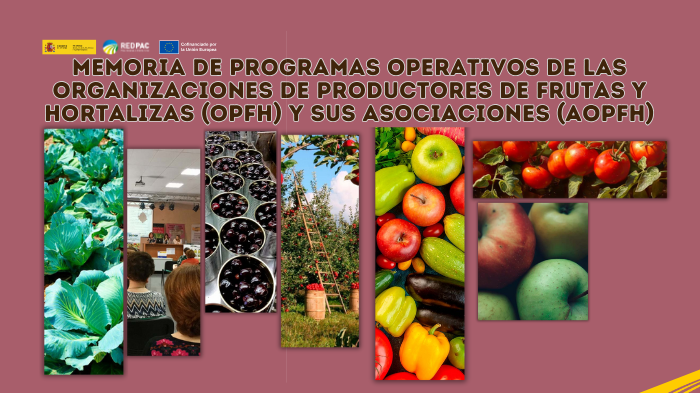
The “Report on operational programs of fruit and vegetable producer organizations” (OPFH) and their associations (AOPFH) is a guide to understanding the role of OPFH/AOPFH and the importance of the operational programs they develop
- The “Report on operational programs of fruit and vegetable producer organizations” (OPFH) and their associations (AOPFH) is a guide to understanding the role of OPFH/AOPFH and the importance of the operational programs they develop
- The report includes data, interviews, and practical annexes on actions, objectives, and management of the fruit and vegetable sector.
Fruit and vegetable producer organizations (OPFH) and their associations (AOPFH ) are a key component of the2023-2027 CAP : they consolidate supply, stabilize markets, channel investment, and accelerate the sustainability of the country's largest agricultural sector. The new report on operational programs for OPFH and their AOPFH , published by the CAP Network, compiles the regulatory and production context, results and indicators of the operational programs (OPs), and interviews with representative entities who share, firsthand, what works for them, what challenges they face, and how they are preparing for the future.
What do we find in Memory?
Spain has 471 Producer Organizations (POs ) (12 of them AOPFHs), which market around 50% of the national fruit and vegetable production. Through the Fruit and Vegetable Sectoral Intervention ( ISFH ) of the 2023-2027 PEPAC (European Plan for the Common Agricultural Policy), operational programs channel more than €300 million annually in EAGF (European Agricultural Guarantee Fund) co-financing, positioning Spain as the leader in the European Union (EU) in terms of support volume. The publication opens with a contextual article and continues with interviews that explore very diverse realities.
The document notes that the Operational Plans (OPs) are multi-year plans that have existed since 1996 (CMO reform) and that two frameworks currently coexist: the CMO-OPs (until 31/12/2025), and the CAP-OPs (since 2023), which are now integrated into the CAP Strategic Plan. The report explains the objectives of the OPs (concentration of supply, environmental and climate improvement, quality, innovation, competitiveness, crisis prevention) and how they are approved and implemented (collective nature, assembly, ex-ante evaluation, minimum environmental and R&D spending, etc.).
How do operating systems work?
A) Objectives and minimum requirements:
Environmental and climate : the PO-PEPACs increase the weight of the agri-environmental objective and require a minimum environmental expenditure throughout the five-year period, with higher aid intensities (up to 80% in certain actions).
R&D : a minimum of 2% of spending on experimental research is set.
B) Financing :
Investments and actions in infrastructure, quality, marketing, digitalization, R&D, training, environment, as well as crisis management measures (withdrawal with free distribution, green harvesting, no harvesting, communication, etc.).
C) Market tools
Crisis prevention and management (withdrawals, green harvesting, non-harvesting, replanting, communication) and extensions of standards in economic constituencies (when the OPFH/AOPFH reach sufficient representativeness thresholds) to apply quality, promotion or research agreements to the entire territory.
D) Recent results
In 2024, PO-OCM accounted for 43.4% of spending on production planning and 26.8% on increased commercial value; environmental measures accounted for 14.2%.
In the PO-PEPAC, planning reached 33.9% and measures linked to the agri-environment and climate reached 29.8%, with a redesign of the objectives map compared to the previous period.
Voices from the industry: interviews
The report dedicates its central section to interviews with Producer Organizations and Associations of Producer Organizations (OPFH) that provide practical insights, data, and proposals. Here are some of them:
VICASOL (Almería) — Greenhouse (tomato, pepper): aid intended for environmental actions (intensity of 80% ).
GREGAL (Murcia) — Open air (lettuce, melon, celery): energy efficiency (cold chambers) and automation to reduce costs and dependence on labor; solar panels to cover the minimum environmental requirements.
Fructícola Empordà (Girona) — Apples: hail nets, solar panels and preservation for quality and shelf life.
FRUCIMU (Murcia) — Citrus and stone: machinery renewal and renewable energies.
ACTEL (Lleida) — Stone and pome: around 25% of the fund in environmental (co-financed at 80%); they combine resistant seedlings, anti-hail netting, renewable energy and quality.
ACVJ (Valle del Jerte and La Vera) — Cherry, plum, chestnut, fig: digitization, robotization, refrigeration and energy efficiency for a mountain agriculture model.
UNEXTOMATES (Canary Islands) — Greenhouse (tomato, papaya): integrated pest management, biodegradable materials and plastic replacement.
Agropecuaria del Cinca (Huesca) — Hueso: precision technologies, integrated pest management and water/energy efficiency; priority for climate adaptation and circularity.
APROA (AOPFH) — Partial R&D program with projects such as Prosuelo and Horticultura Viva.
ANECOOP (AOPFH) — Promotion of healthy diet and R&D (e.g. Sustainability Observatory), with 87% of members delegating their R&D to meet the minimum 2%.
Appendices: what you will find and how to use them
The report includes summary tables with a catalog of eligible interventions and actions, according to current regulations, in the OPs under both frameworks (OCM and PEPAC): codes, description, type of expenditure, and purpose (operating and central infrastructure, quality, marketing, R&D, training, environmental measures, promotion, and crisis management, among others). These tables serve as a practical guide for planning, justifying, and identifying the intensity and requirements for each action.