




07 de July de 2026
Cambio climático y gestión de recursos naturales
Calidad y cadena alimentaria
Biodiversidad y paisaje
The CAP Network conference in La Rioja focused on soil health and efficient water management as key tools in the fight against climate change.
- The CAP Network conference in La Rioja focused on soil health and efficient water management as key tools in the fight against climate change.
- Five innovative projects shared advances on biodiversity, digitalization, green cover and water efficiency
- Farmers from different sectors showed how innovation can improve the sustainability and profitability of farms.
Soil health and efficient water management have become two of the main challenges for the future of agriculture. In a context marked by rising temperatures, irregular rainfall, and a greater frequency of extreme weather events, the adaptability of farms is fundamental to ensuring their long-term viability and sustainability.
With the aim of sharing knowledge, experiences, and innovative solutions to address these challenges, the CAP Network held the conference “Soil, Water, and Climate: Real-World Experiences for Resilient Agriculture” on June 16 and 17 in La Rioja . The event brought together researchers, technicians, farmers, and organizations involved in innovative projects to analyze practices that contribute to improving soil health, optimizing water use, and strengthening the resilience of agricultural systems. The conference was also held at a key moment for the sector, coinciding with the preparatory work for the future Common Agricultural Policy (CAP) , in which soil health, water resilience, and adaptation to climate change are among the priorities identified by the institutions.
Soil and water, two strategic resources for the future of the agricultural sector
One of the most repeated messages during the day was the need to understand soil as a strategic resource for food production and for adapting to climate change. The various presentations all emphasized the close relationship between soil health, biodiversity, and water availability.
Throughout the interventions, it became clear that certain management practices contribute to improving soil structure, increasing its water retention capacity, and promoting biological activity, fundamental aspects for dealing with increasingly frequent phenomena such as drought or torrential rains.
Five innovative projects to improve soil and water management
One of the main focuses of the meeting was the presentation of initiatives that are developing innovative solutions to address the challenges related to soil, water and climate from different perspectives:
The Viña Raíces Operational Group focuses on monitoring innovative practices in vineyards in semi-arid regions to evaluate soil parameters and improve crop resilience. Their work includes studies on cover crops and mulching to reduce water stress and promote water conservation.
SOILBIO aims to improve our understanding of how agricultural management decisions influence biodiversity and soil health. The project analyzes aspects related to biological activity, fertility, and the ecosystem services provided by the soil.
SOS Soil , which assesses soil quality in different agroecosystems and studies the effect of sustainable practices such as plant cover, reduced tillage or the incorporation of cover crops.
LIFE Triplet , focused on the digitalization of fertigation through tools capable of monitoring in real time the water status of the soil and crops to optimize the use of water and nutrients.
HidrOlivar Operational Group , which develops systems to improve water use and reduce soil degradation through solutions based on infiltration and efficient water resource management.
From innovation to practice: real-world experiences in the field
The round table provided an opportunity to learn about experiences developed in different territories and productive sectors, showing how innovation can translate into concrete improvements, both environmental and economic.
Participants shared the transformation processes on their farms, the challenges they encountered while implementing new practices , and the results achieved after years of work. From cereal farms that have significantly reduced their use of external inputs to initiatives aimed at restoring degraded soils or improving water use efficiency, the testimonials highlighted the importance of combining technical knowledge, experimentation, and adaptation to local conditions. Examples included:
A cereal farm in Zamora that has significantly reduced the use of fertilizers , pesticides and fuel through regenerative and direct seeding practices.
An organic farm in Campo de Montiel (Ciudad Real) that has reduced mechanized work thanks to the use of plant cover and more efficient soil management.
An organic olive grove in Jaén that has promoted actions aimed at improving water infiltration , reducing runoff and restoring the soil's absorption capacity.
Knowledge sharing as a driver of change
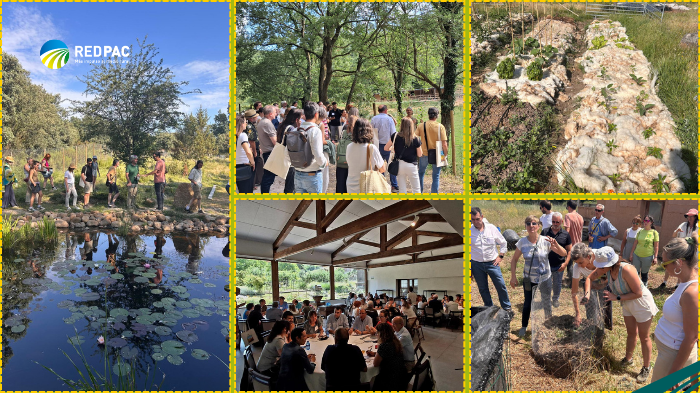
The second day of the event allowed participants to put some of the topics discussed into practice through visits to various farms and demonstration sites in La Rioja. Attendees learned about experiences related to agroecological management, no-till farming, rotational grazing, and other practices aimed at improving soil health and the resilience of production systems.
Over the two days, the value of knowledge exchange between farmers, researchers, and innovative organizations in advancing towards more resilient agricultural systems became evident. The combination of research, innovation, and practical experience made it possible to identify solutions that are already contributing to improved soil and water management, strengthening farms' capacity to adapt to current and future climate challenges.